Toy Story 5 opened this weekend with a premise perfectly suited to our moment.
The familiar cast of analog toys (Woody, Buzz, Jessie) have new competition in the form of a modern plaything: the tablet.
The movie’s central conflict is one many families struggle with: just how much screen time should children be allowed.
In a related development, Europe just passed a new law banning young people under 16 from social media. As Gov.UK writes, “The plans will set a new normal for future generations, kickstarting a cultural shift and driving forward the government’s fight to give every child the best start in life.”
As author of the recent Substack article, “Why I’m Keeping My Kids Away from AI (For Now)”, you might think I would celebrate this news.
I don’t.
Though I think kids shouldn’t be on social media, I am against the government legislating what families should and should not do. Moms and dads should be the ones who decide what is appropriate for our kids, not lawmakers.
More importantly, I am skeptical that governments suddenly discovered a concern for children’s wellbeing after two decades of ignoring the problem.
When did Facebook arrive? In 2004.
22 years ago I knew that wasting your time posting what you ate for breakfast wasn’t good for society. I worried that all this digitalization would diminish analog reality, that people would stop participating in real life (IRL.)
That’s exactly what has happened.
Young people are so starved for real connection that we have a Loneliness Epidemic. In 2023, Dr. Vivek H. Murthy, 19th and 21st Surgeon General of the United States wrote the following in his report of the crisis:
Loneliness is far more than just a bad feeling—it harms both individual and societal health. It is associated with a greater risk of cardiovascular disease, dementia, stroke, depression, anxiety, and premature death.
The mortality impact of being socially disconnected is similar to that caused by smoking up to 15 cigarettes a day, and even greater than that associated with obesity and physical inactivity.
It’s no secret that screen addiction and social media in particular, are harming our youth.
In 2016, Simon Sinek said the following in an interview: “We have age restrictions on smoking, drinking and gambling, but we have no age restrictions on social media and cell phones. Which is the equivalent of opening up the liquor cabinet and saying to our teenagers, ‘Hey, by the way, if this adolescence thing gets you down—help yourself.”
So, why might the government be rolling out age-restrictions laws on social media? Electronic Frontier Foundation has argued that “inherently privacy-invasive” age-verification requirements are surveillance systems:
EFF has long warned against age-gating the internet. Age verification technology itself is often inaccurate and privacy-invasive. These restrictive mandates strike at the foundation of the free and open internet. They are tools of censorship, used to block people from viewing or sharing information that the government deems “harmful” or “offensive.” And they create surveillance systems that critically undermine online privacy, chill access to vital online communities and resources, and burden the expressive rights of adults and young people alike.
The EFF is no fringe voice.
It has been one of the most influential defenders of digital civil liberties since the early days of the internet, shaping major legal battles involving free speech, privacy, encryption, government surveillance, and online innovation.
In 1996, its cofounder John Perry Barlow penned “A Declaration of the Independence of Cyberspace.” 30 years since it’s publishing, it is worth reading in its entirety for the same reason we should urge our kids to read our nation’s Declaration of Independence.
Here is one key passage especially applicable to this discussion:
Governments derive their just powers from the consent of the governed. You have neither solicited nor received ours. We did not invite you. You do not know us, nor do you know our world. Cyberspace does not lie within your borders. Do not think that you can build it, as though it were a public construction project. You cannot. It is an act of nature, and it grows itself through our collective actions.
Returning to Toy Story 5 and the screen addiction problem, there is one more dimension to this societal challenge: AI.
AI has supercharged all the other problems social media introduced. As just one example, let us recall Mark Zuckerberg’s solution to the loneliness epidemic is to get AI friends.
So, what is the real solution to this mess? Parents.
Yesterday was Father’s Day. Around the world we celebrate dads for being caretakers and providers. As a dad myself, I feel obligated to protect my kids from screens and AI overuse. It’s my duty to watch out for my children who don’t know they are being targeted by a trillion-dollar industry that wants to exploit kids for a lifetime of profit.
And the gateway there is the screen.
Dads, if you are reading this, please embrace the special role you play in your child’s life. Until they are of age to make informed decisions, your children need you to look out for them, to protect their innocence and to show them every day just how sacred childhood is.
Thank you very much, governments around the world for offering to safeguard our kids. That’s kind of you, but it’s our responsibility.
We’ll take it from here.
*****
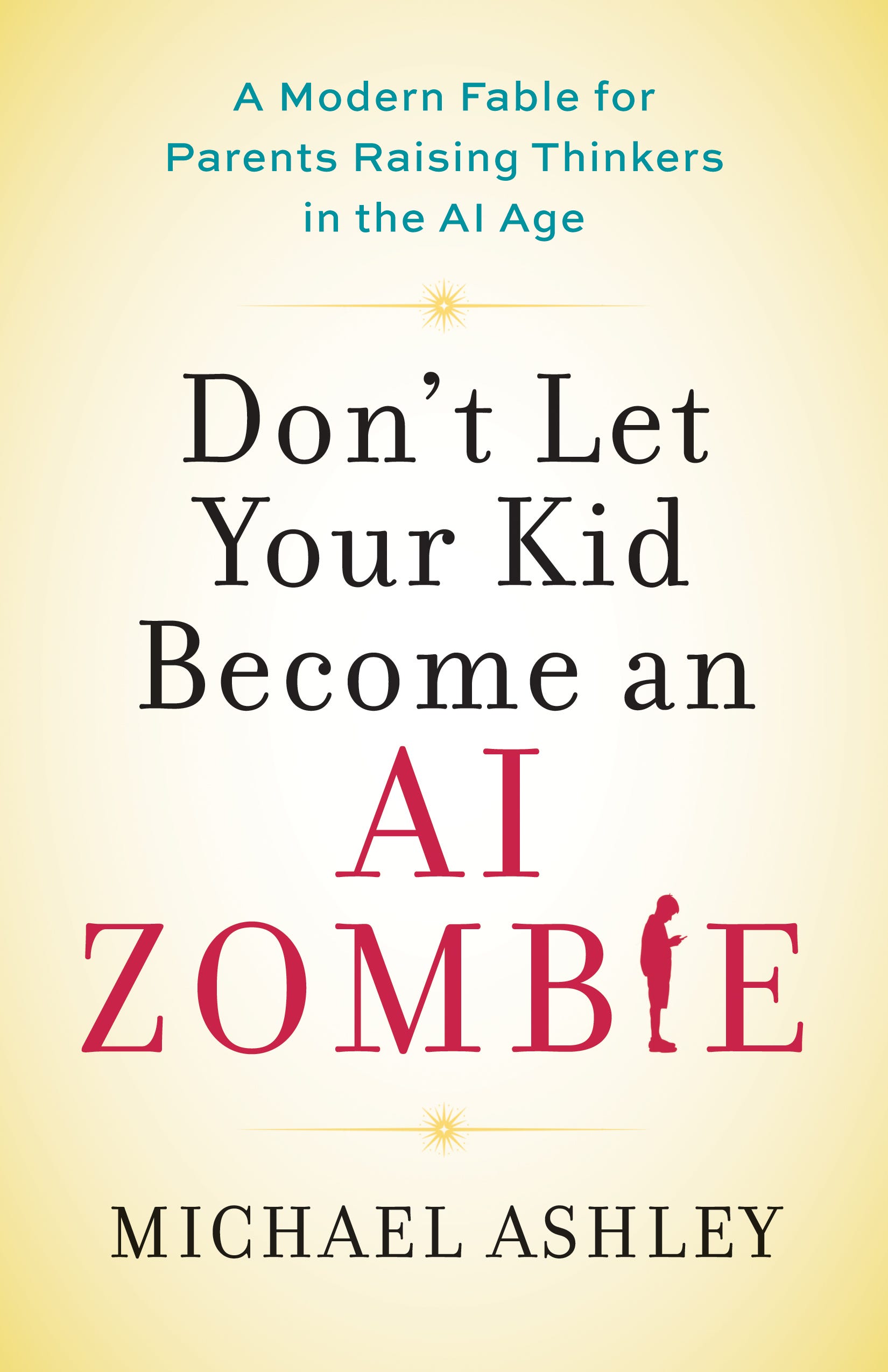
Worried about raising kids in the AI Age? I am too. That’s why I wrote this new book. Sign up here to join my pre-order list.